
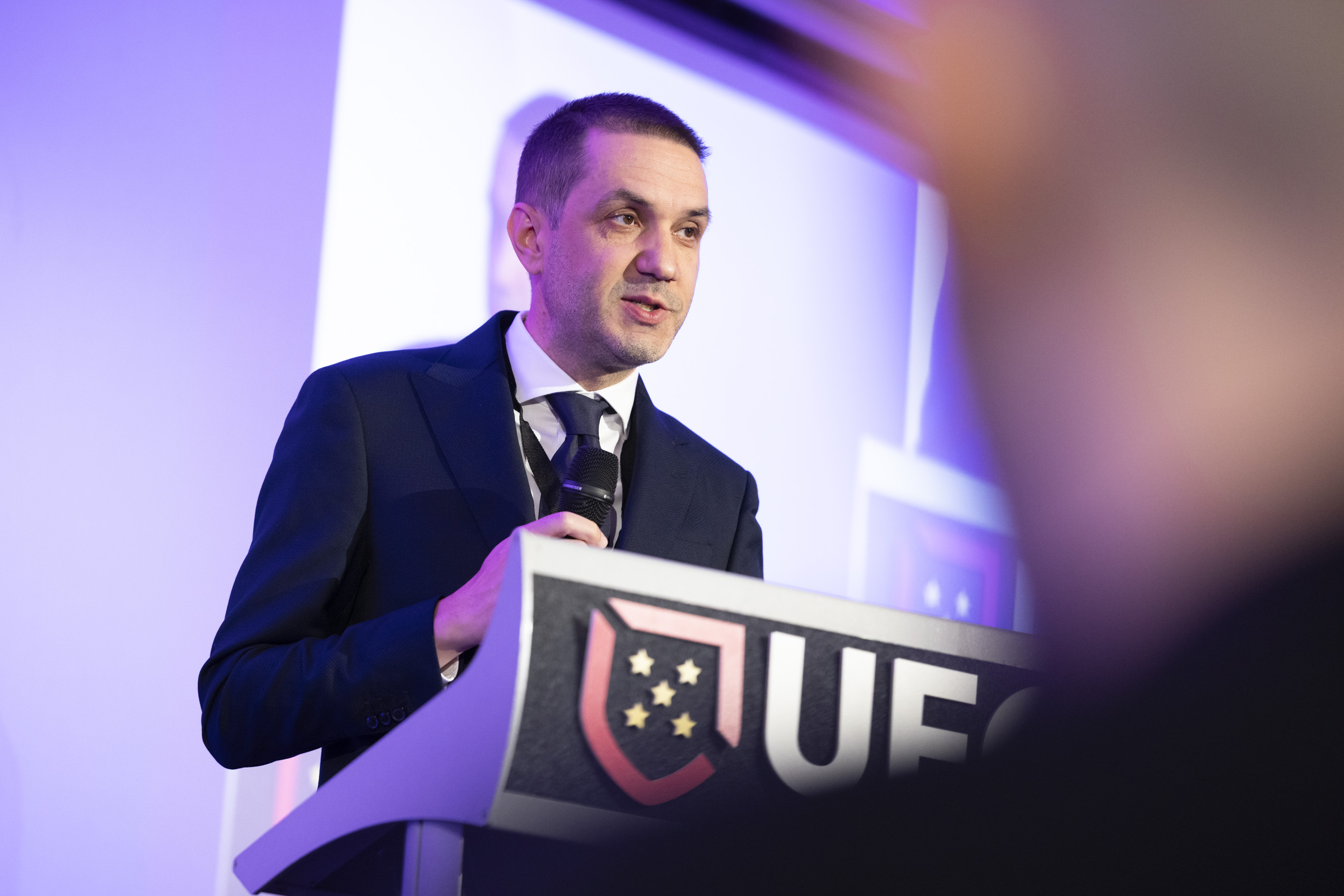
European football gathers for UEC Football Forum in Brussels following landmark European Commission complaint to call for a fair say for every club
UEC lays out the case for opening football's governance, as the Commission sets out its new strategy for European sport
Brussels, Belgium, 17 November 2026 – The Union of European Clubs (UEC) today brought together representatives of more than 165 clubs from 30 countries in Brussels in the same week the European Commission presented its Communication on the European Sport Model and EU sport ministers meet at the Education, Youth, Culture and Sport Council. The Forum came a day after UEC filed a complaint with the European Commission over how Europe's clubs are represented.
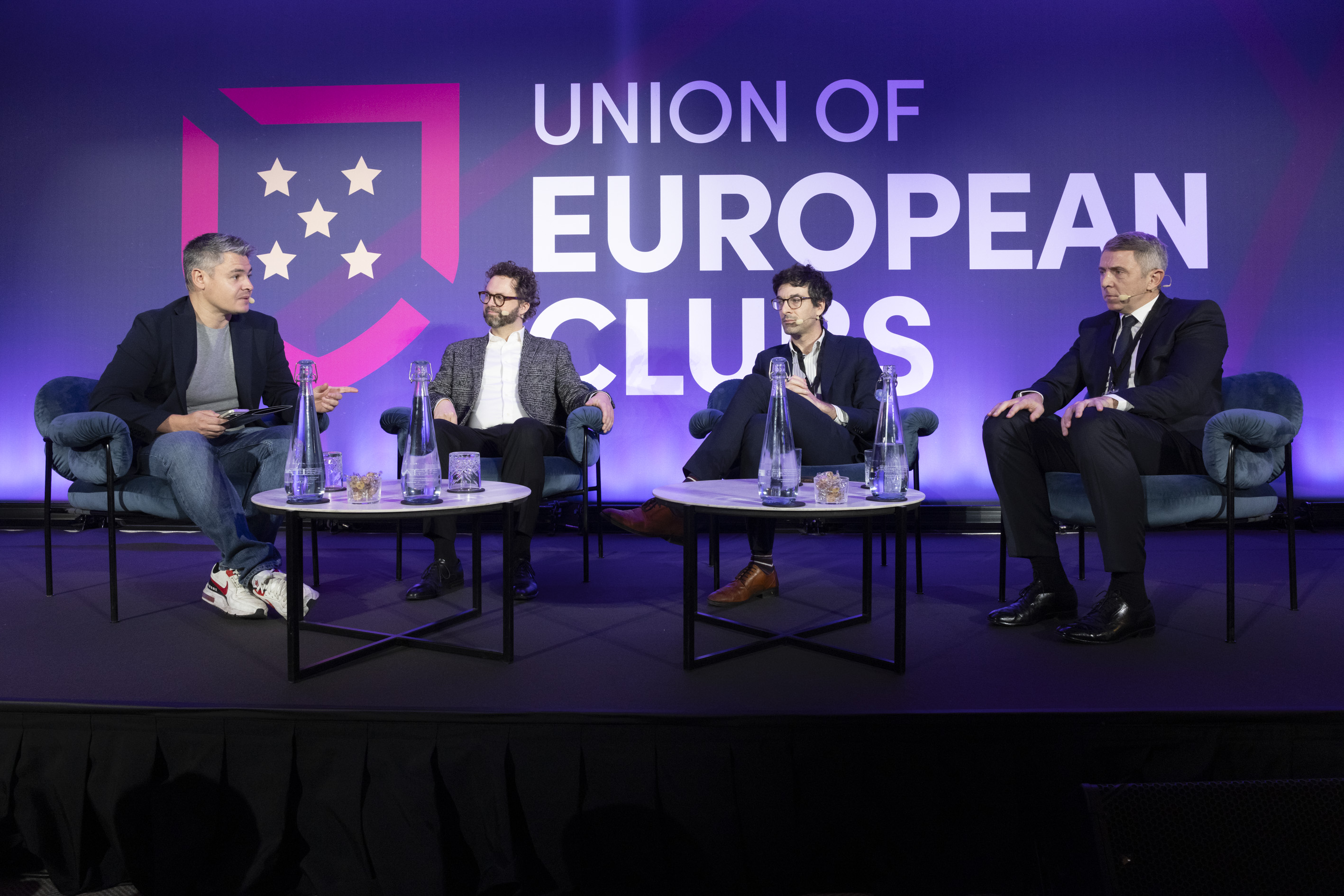
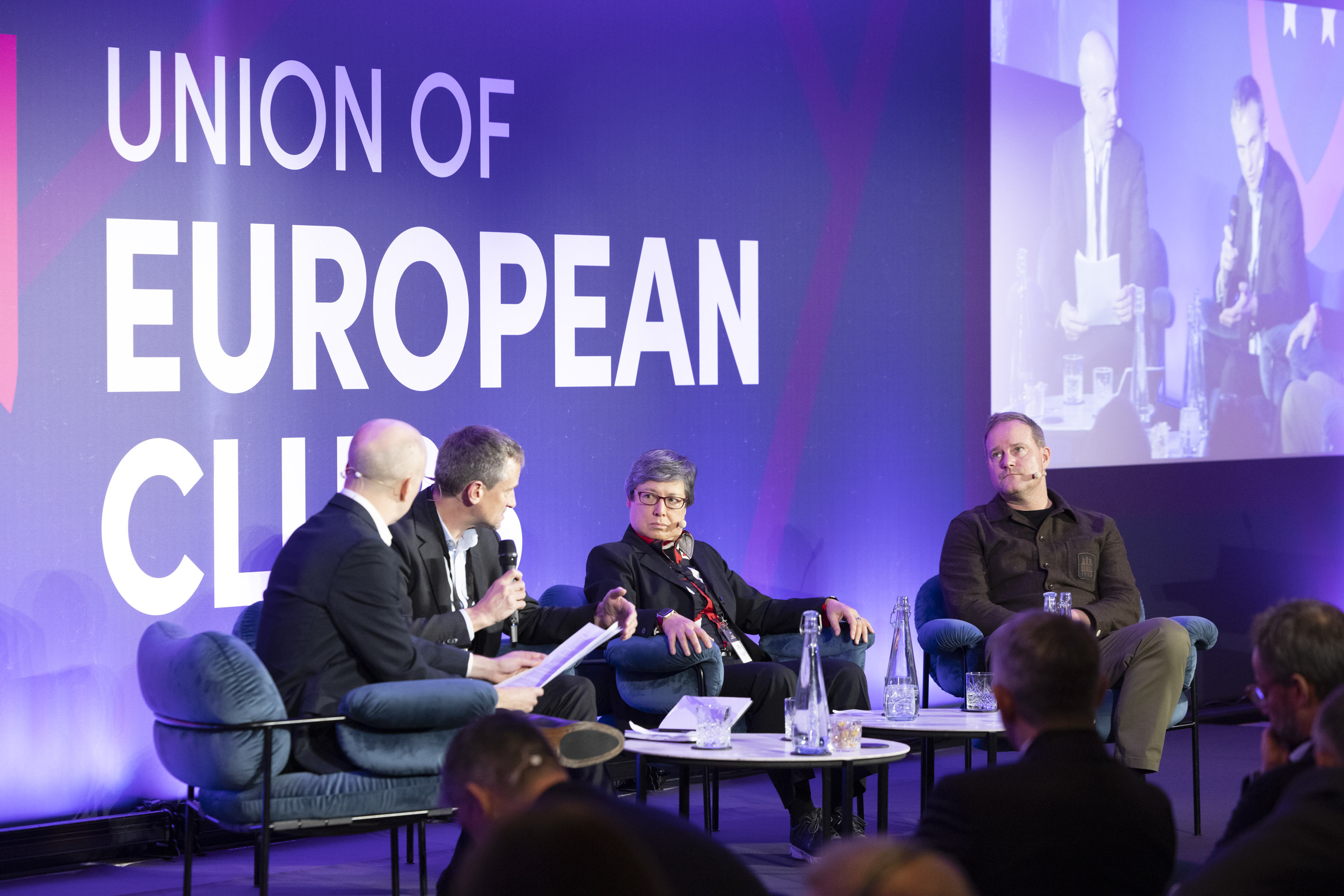
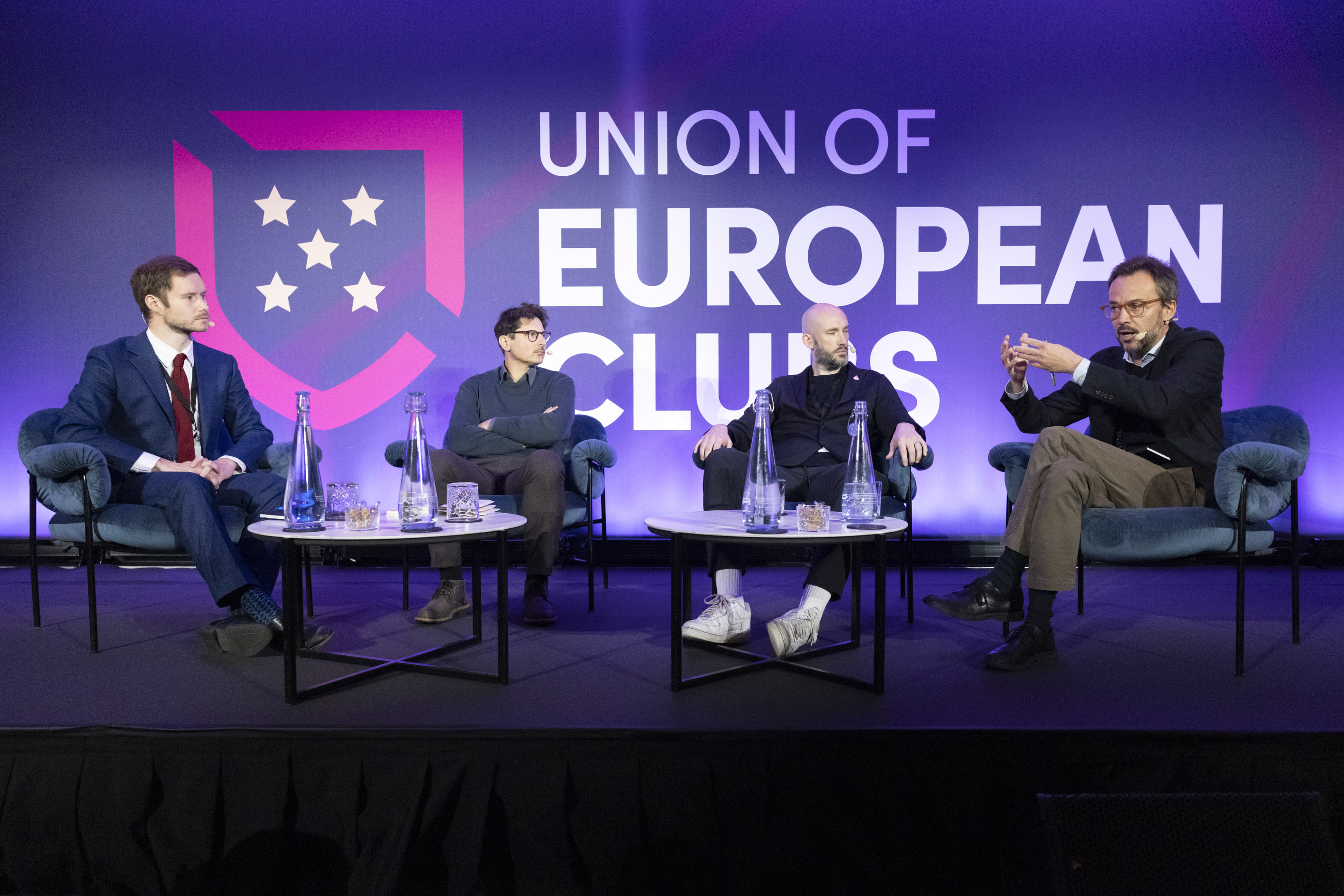
At the fourth UEC Football Forum, held under the theme "Fair Share, Fair Game", club leaders, senior league officials, policymakers, academics and football stakeholders examined the legal case behind the complaint and the pressures on clubs outside a small elite that led the UEC to file it. During the forum, the European Leagues endorsed the UEC’s call to be recognised in the EU Sectoral Social Dialogue Committee on Professional Football. Later panels turned to the governance of international football and to practical policies for a more competitive playing field and a healthier football pyramid.
Yesterday, the UEC filed its complaint against the Memorandum of Understanding between UEFA and European Football Clubs (EFC, formerly the European Club Association), which recognises EFC as "the sole body" representing European clubs. The complaint asks the Commission to investigate whether the agreement, extended to 2033 but never published in its current form, breaches EU competition law.
Prof. Miguel Poiares Maduro, former Advocate General at the Court of Justice of the EU, who advised the UEC on the complaint, said: "Whoever controls access to European football must do so on transparent, objective and non-discriminatory terms. Over the past 20 years, entrenchment has increased and competitive balance has declined. Ending the exclusive mandate at the heart of this agreement would strengthen UEFA's ability to govern in the interest of all clubs. EU law is a tool to protect the European Sport Model, not a threat to it."
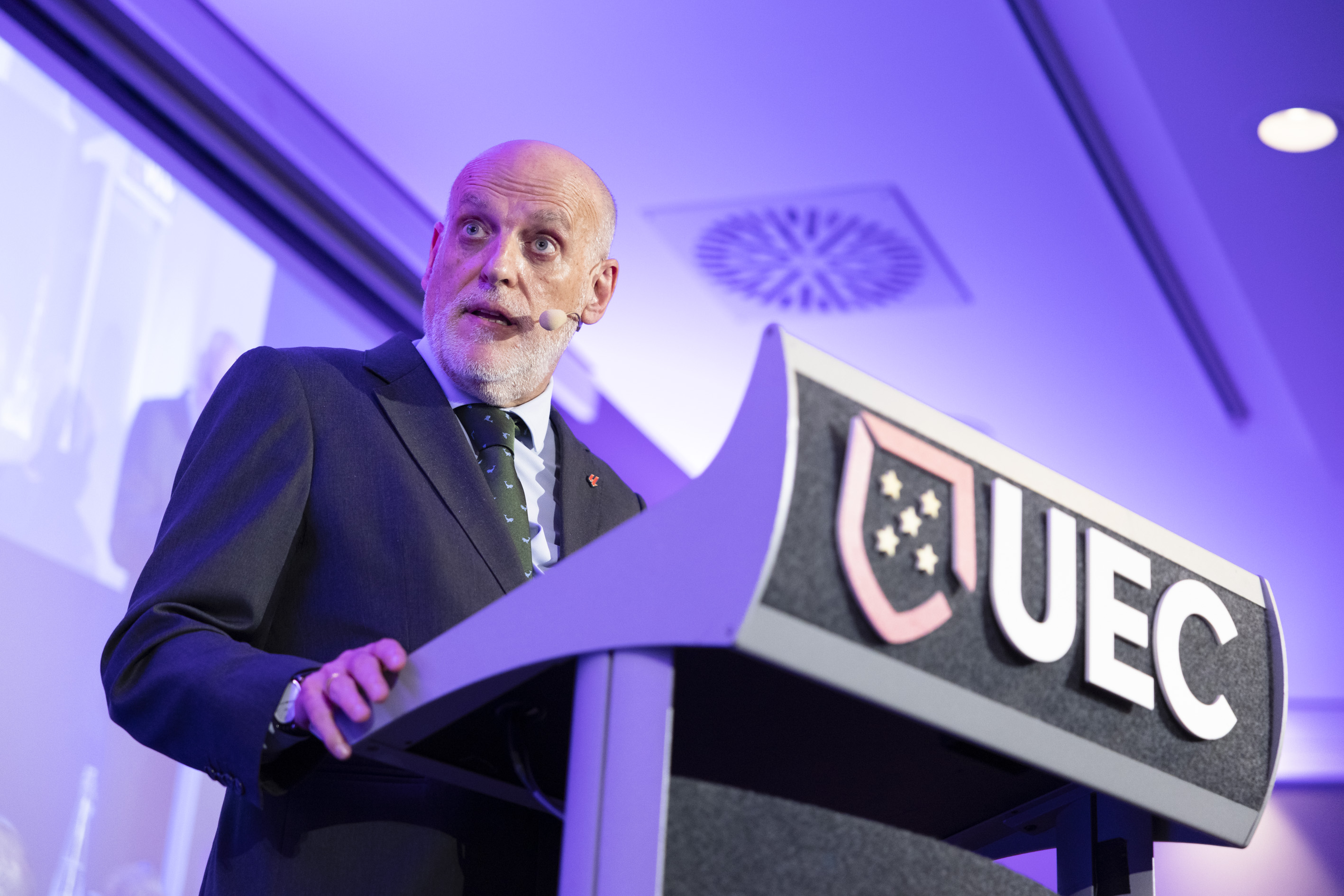
Gareth Farrelly, CEO of the UEC, said: “We may not yet have formal recognition, but since our founding, we’ve created a certain pressure. Just ask yourself why the EFC has gone from 100 members to 800, and then to 900. Clubs that were completely forgotten about are now being invited in, and that is a direct result of the UEC applying the right pressure.”
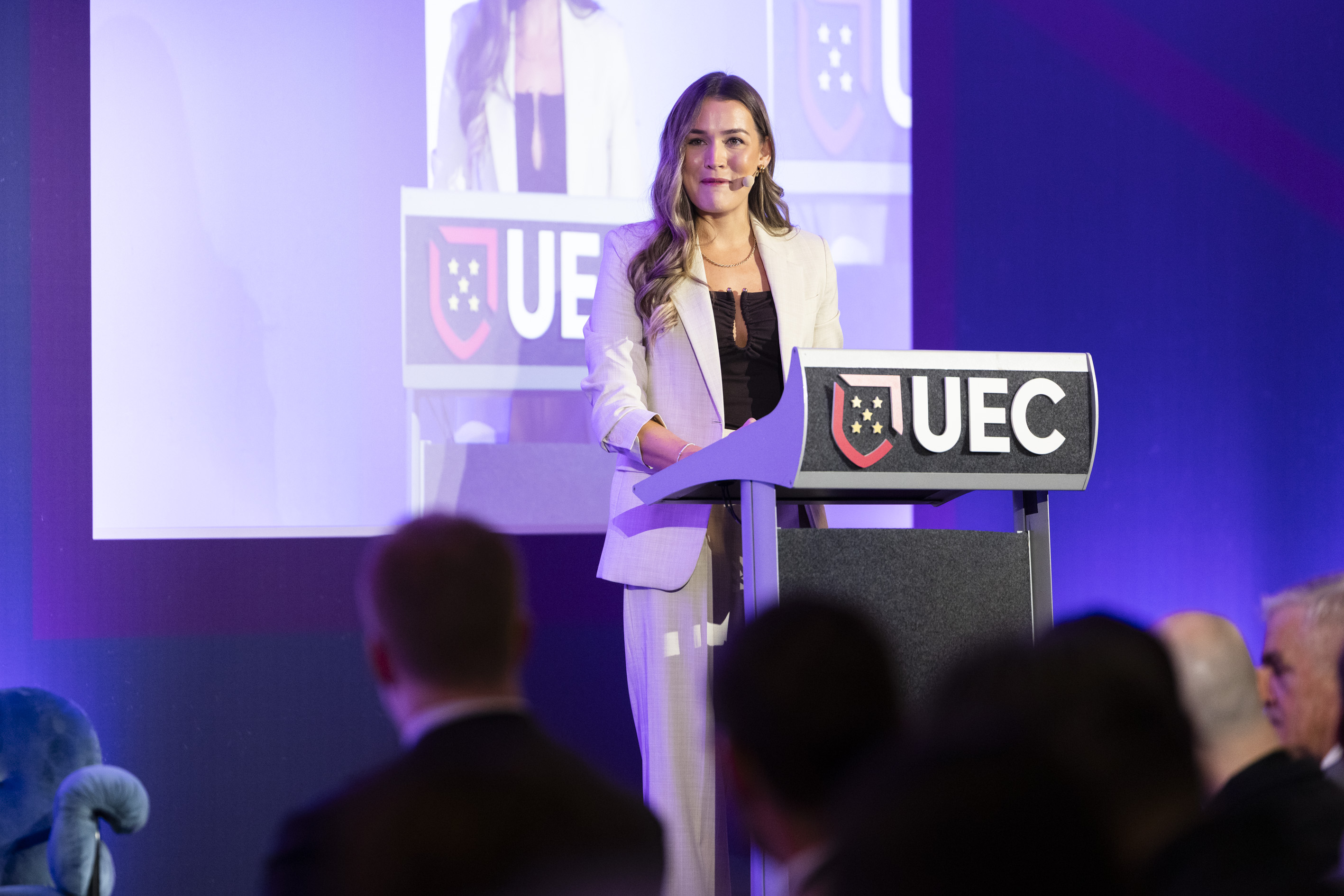
In a video message that set the tone for the discussions to follow, MEP Carolina Morace, a former player and coach, said: “European football cannot be governed by a few in the interests of a few. Every club deserves to have a say in decisions that affect its future, regardless of its size or financial strength.”
Antoine Duval, Senior Researcher, Asser Institute said: “EU citizens want to get their football back. The EU is not about five capitals in five countries. It is about 27 Member States, and everybody wants a seat at the table of European club competitions. The UEC's legal complaint is a massive opportunity for the European Union to do something extremely popular. The EU became visible to many people through the Bosman ruling. Now, 30 years later, is the time to become visible again through football.”
Jan Zglinski, Associate Professor of Law, London School of Economics, “Politicians have started to understand that not touching football isn’t the best strategy. Acting to improve the state of the game could win them elections.”
Moya Dodd, former member of the FIFA Council and AFC Executive Committee, said: “It’s essentially an extractive model. Money is made at tournaments like the World Cup. The resources come from the clubs and leagues, who are forced to release players at a rate they don’t get to negotiate. Then the bounty is distributed by the governing body in ways that aren’t really transparent. If you want to challenge that, where do you go? The system of representation doesn’t give you enough of a voice to make a fundamental challenge to how it works.”
Oke Göttlich, President of FC St. Pauli and DFL board member, said: “Football is a community game, a people’s game. But today, it has become an investment game. My message to every club owner is simple: speak to your fans. Ask them what their needs are. Listen to them. Because football belongs to the people.”
The calls heard at the Forum for fairer representation and redistribution were echoed by the European Commission. On the same day, it adopted its Communication “A Strategic Vision for Sport in Europe: Reinforcing the European Sport Model”, presented by Commissioner Glenn Micallef. The Communication follows the cooperation arrangement UEFA and the Commission renewed on 9 November, which commits to open competition based on sporting merit, to representative and inclusive governance involving leagues, clubs, players and supporters, and to financial redistribution across the football pyramid.
These are the very goals the UEC's complaint pursues. The complaint asks whether an exclusive mandate for one association is compatible with those commitments and with EU law. Delivered in full, for every club, they would meet what the UEC is asking for.
“It is not against UEFA’s role as the governing body of European football. We fully respect that role. Representative organisations can coexist. We are not asking for another voice to be silenced. We are asking for more clubs to be heard” said Ovidiu Costeșin, President of the UEC.
The Forum also set out practical policies to foster a level playing field. Pavel Kolev, the UEC's Director of Operations, presented three proposals: the Player Development Reward, the protection of domestic media rights and a fairer model for distributing UEFA revenues. The Player Development Reward would redistribute 5% of UEFA club competition revenue among the clubs that developed a player between the ages of 12 and 19, answering Ms Morace's earlier call to reward clubs "that invest every day in developing talent". By the UEC's estimate, the Reward alone would have sent around €67 million to clubs outside first divisions in 2025/26.
Alex Phillips, Former Head of Governance and Compliance UEFA said: “The value is generated at the bottom of the system. The real wealth creators are amateur, semi-pro, and small and medium-sized clubs doing all the work. The big clubs come and take the players when they’re ready.”
Alex Muzio, President, Union Saint-Gilloise said: “One club told me: if we make the Champions League, we break even. If we don’t, we lose about €50 million. I asked what the plan was. They said: make the Champions League. They didn’t. That’s not a plan, but that’s where European football is today.”
Asked whether the biggest clubs, as the main drivers of football’s success, should keep most of the revenue, Raffaele Poli, Co-founder and Head CIES Football Observatory replied: “What do the biggest clubs do with all this money? They are heavily indebted. They build new stadiums on debt and increase the debt. The show they put on is fantastic, but as businesses many are close to bankruptcy, failing to deliver even from a pure economic perspective. Should we encourage this? I don’t think so."
During the final panel session, Alberto Colombo, Managing Director and General Secretary of European Leagues, officially endorsed the Union of European Clubs' call to be recognised in the EU Sectoral Social Dialogue Committee on Professional Football. "European Leagues endorses the UEC's place at the Social Dialogue table. A dialogue must be based on the principle of inclusivity." The UEC has been asking to join for two years. Recognition would finally give our more than 140 member clubs a voice in the EU institutions, in the place where decisions about professional football are made.
Closing the Forum, LALIGA President Javier Tebas said: "The complaint the UEC has presented to the European Commission is an important step forward. Representation isn’t about the number of clubs. It’s about how you elect the governing bodies. If, out of 1,000 clubs, only 120 have a vote, that is not representative. That is why one club, one vote matters."
The UEC will continue to engage with the European Commission and football stakeholders as the complaint is assessed, while pursuing practical reforms to make European football more representative and equitable. The Commission aims to indicate within about four months whether it will investigate further.
-ENDS-
About the UEC: A Brussels-based non-profit association of more than 140 professional clubs from 28 national football associations, working for democratic governance and competitive balance in European club football. www.ueceurope.org
Notes to editors: The UEC's complaint to the European Commission was announced on 16 November 2026. The press release is here:
A recording of the 2026 UEC Football Forum is available here.
Press Contacts:
Daniel Lissoni, Head of Communications and Engagement lissoni@ueceurope.org
Pavel Kolve, Director of Operations, kolve@ueceurope.org
Gareth Farrelly, CEO, Union of European Clubs;
